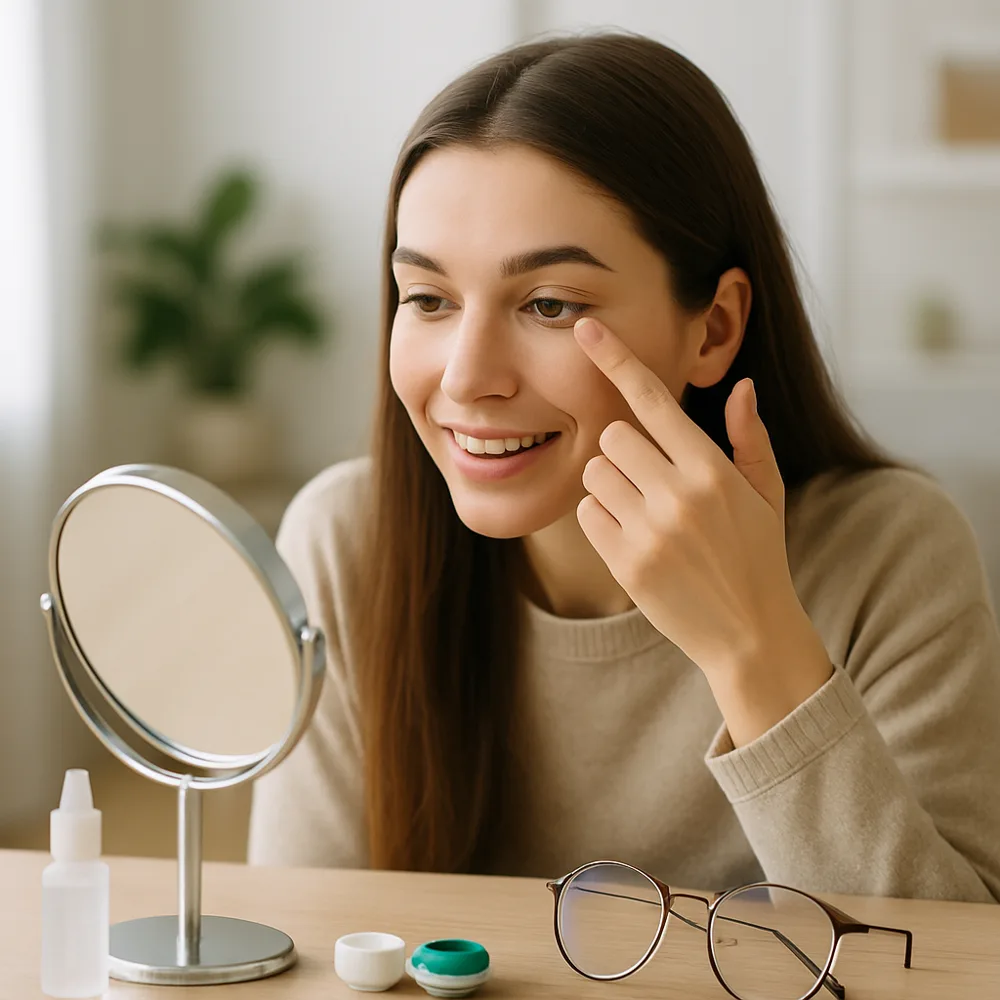
Contact lenses should generally be kept away from water, including tap water, showers, pools, hot tubs, lakes, and the ocean. Water is not sterile and may carry microorganisms that can cling to lenses or contaminate a case. Some eye infections associated with water exposure can be serious and difficult to treat. Even clean-looking water is not a safe rinsing or storage option, and bottled water should not be used as a substitute for lens solution.
Remove lenses before showering or swimming whenever possible, and wear glasses or prescription swim eyewear if you need vision correction in the water. If your activity makes removal impractical, ask your eye care professional about an appropriate plan; do not improvise by wearing lenses longer or reusing a wet pair. Daily disposables may be part of a clinician-approved plan for some activities, but they do not make water exposure harmless.
If water gets into your eyes while wearing lenses, remove the lenses as soon as practical and follow professional guidance about whether to discard them. Never rinse a lens or case with water. Contact an eye care professional promptly if you notice pain, redness, light sensitivity, discharge, or blurred vision after exposure. Mention the type of water and when the exposure occurred. These details can help the practitioner advise you on next steps.